
A 7mm finescale layout by Paul Holmes
Scale 7mm/1ft
Size 14’ x 6.5’
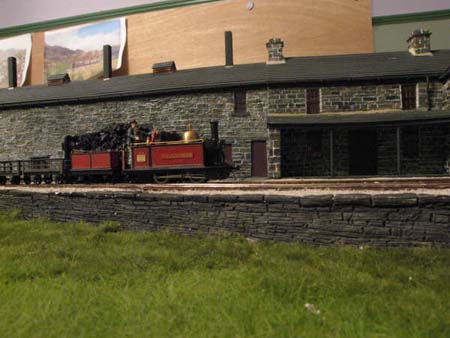
Dinas Station served the village of Rhiwbryfdir, a thriving community and the original upper terminus of the FR, in what evolved into the town of Blaenau Ffestiniog. In horse drawn times, one of the Festiniog"s smithies was sited here. When passenger services commenced in 1865, Dinas was the original terminus and the Station building was added to the pre-existing 2 storey engine shed. In 1866, the second Blaenau terminus station was opened at Duffws, and until 1870, trains terminated alternately at each station. After this date, Dinas reverted to being a goods only station.
The model is set in October 1869, and gathering information for construction was interesting!! The Ordinance Survey map of 1888 still shows the railway lines and buildings, but soon afterwards, the buildings at the base of the incline, including the rather grand Georgian "Dinas House", the rows of cottages and Holland"s original slate warehouses were all to be buried under the ever expanding spoil heap of slate waste (did you know that for every ton of finished slate produced, another 9 tons of waste was created).
There are a handful of photos in existence which show some of the structures, and with this information the model has been constructed. If you go there today, all you will find is a wall of slate fragments and no sign that there was ever a thriving hamlet there can be found. Only the rock face that separated the station from the hamlet remains - a chunk of rock protruding from the spoil heap. I have tried to capture the rural nature of Blaenau, before the slate waste heaps completely dominated the town.
The layout is built to 7mm scale, running on 14mm gauge track. Trackwork is all handbuilt using code 95 bullhead rail (S Scale Association) with cast whitemetal chairs. Stock is predominately from Port Wynnstay. So far, only The Prince and Mountaineer are running two of the original four locos delivered to the railway in 1863. At this date, I can also run the two saddle tanks and Little Wonder, but later Fairlies and bogie carriages are still "in the future". The layout is controlled with DCC and features sound from Deitz.
Pictures show the layout still under construction.



https://www.narrowgaugenorth.org.uk/index.php/85-public-news/exhibitors-previous?start=208#sigProIdaa4d72847e
The Abbey Light Railway are displaying number 11 of the fleet, 0-4-0 petrol mechanical 10hp Baguley in restored condition. The rest of the fleet of 2 foot gauge industrial diesel locos can be seen operating on Sunday 13th March during our Diesel Gala from 1pm until 5pm. These small locomotives were some of the first petrol locomotives, and were built in 1918 for use on very lightly laid track on the front line in the First World War. They were built as lightweight as possible, but were not a very successful design. The major faults included difficulty in changing gear, as the cone clutch was operated by partially winding on the handbrake, they also had a very high driving position, not preferable in a war zone! Many of these locos were transferred to supply depots and forestry railways where their short wheelbase and ability to run on lightly laid rails was an advantage.


https://www.narrowgaugenorth.org.uk/index.php/85-public-news/exhibitors-previous?start=208#sigProId433ba02819
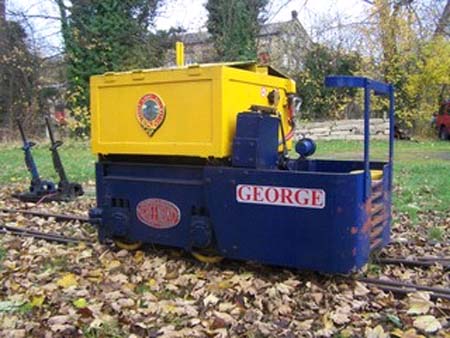
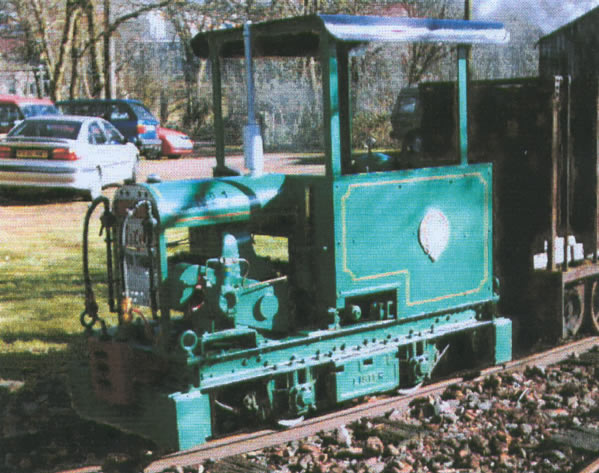
Abbey Light Railway have displayed a number of locomotives at previous exhibitions. Images of some of these locomotives can be seen below.
 Abbey Light Railway
 Abbey Light Railway
 Abbey Light Railway
 Abbey Light Railway
 Abbey Light Railway
https://www.narrowgaugenorth.org.uk/index.php/85-public-news/exhibitors-previous?start=208#sigProIde780dacaec
The Abbey Light Railway will be displaying a Hudson 'V' Skip wagon. They will also be holding their Diesel Gala on Sunday 14th March from 1pm until 5pm. Further details regarding this event can be found on their website.
In 2009, Abbey Light Railway displayed No.10 - an 0-4-0 petrol mechanical Baguley locomotive.
https://www.narrowgaugenorth.org.uk/index.php/85-public-news/exhibitors-previous?start=208#sigProId433ba02819
Abbey Light Railway have displayed a number of locomotives at previous exhibitions. Images of some of these locomotives can be seen below.
Abbey Light Railway
Abbey Light Railway
Abbey Light Railway
Abbey Light Railway
Abbey Light Railway
Abbey Light Railway
Abbey Light Railway
Abbey Light Railway
Abbey Light Railway
Abbey Light Railway
https://www.narrowgaugenorth.org.uk/index.php/85-public-news/exhibitors-previous?start=208#sigProIde780dacaec
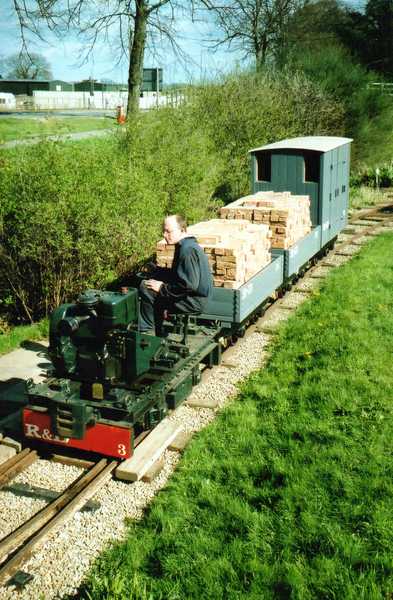
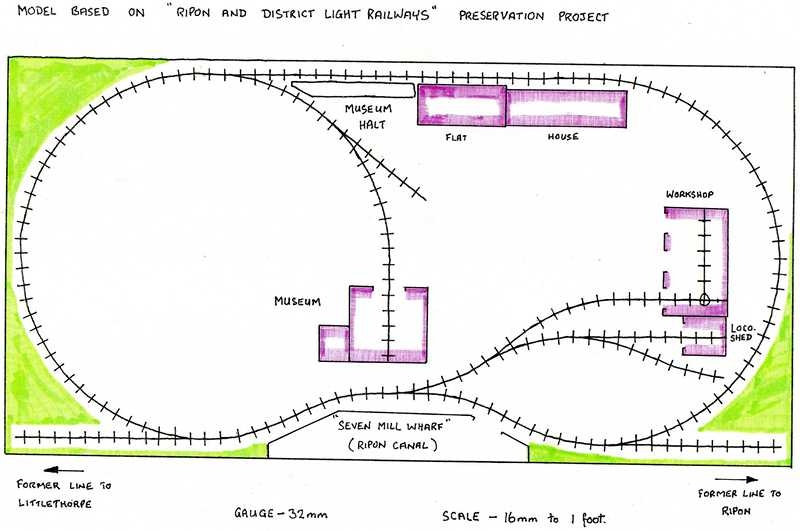
A 16mm scale layout by Neil Clayton
Scale 16mm/1 foot
Gauge 32mm
Size 12' x 3'
https://www.narrowgaugenorth.org.uk/index.php/85-public-news/exhibitors-previous?start=208#sigProId86d8407a6c